EXPLAIN FUNCTIONAL
UNIT OF A COMPUTER.
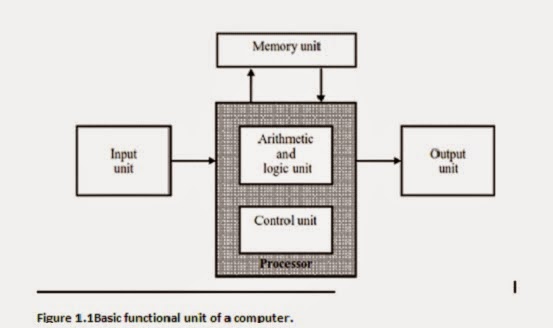
A computer consists of five functionally
independent main parts: input, memory, arithmetic and logic, output, and
control units, as shown in Figure 1.1. The input unit accepts coded information
from human operators, from electromechanical devices such as key boards, or
from other computers over digital communication lines. The information received
is either stored in the computer's memory for later reference or immediately
used by the arithmetic and logic circuitry to perform the desired operations. The
processing steps are determined by a program stored in the memory. Finally, the
results are sent back to the outside world through the output unit. All of
these actions are coordinated by the control unit. Figure 1.1 does not show the
connections among the functional units. The arithmetic and logic circuits,
in conjunction with the main control circuits, as the processor, input and
output equipment is often collectively referred to as the input-output (I/O) unit.
Input Unit
Computers accept coded information
through input units, which read data. The well known input device is the
keyboard. Whenever a key is pressed, the corresponding letter or digit is
automatically translated into its corresponding binary code and transmitted over
a cable to either the memory or the processor. Many other kinds of input
devices are available, including joysticks, trackballs, and mouse, which can be used
as pointing device.
Memory Unit
The function of the memory unit is
to store programs and data. There are two classes of storage, called primary
and secondary. Primary storage is a fast memory that operates at electronic
speeds. Programs must be stored in the memory while they are being executed.
The memory contains a large number of semi conductor storage cells, each
capable of storing one bit of information. These cells are rarely read or
written as individual cells but instead are processed in groups of fixed size
called words. The memory is organized so that the contents of one word,
containing n bits, can be stored or retrieved in one basic operation.
To provide easy access to any
word in the memory, a distinct address is associated with each word location.
Addresses are numbers that identify successive locations. A given word is
accessed by specifying its address and issuing a control command that
starts the storage or retrieval process. The number of bits in each word
is often referred to as the word length of the computer .Typical word lengths
range from 16 to 64 bits. The capacity of the memory is one factor that characterizes
the size of a computer.
Programs must reside in the memory
during execution. Instructions and data can be written into the memory or read
out under the controller of the processor. It is essential to be able to access
any word location in the memory as quickly as possible. Memory in which any
location can be reached in a short and fixed amount of time after specifying
its address is called random-access Memory (RAM). The time required to access
one word is called the Memory access time. This time is fixed, independent of
the location of the word being accessed. It typically ranges from a few
nanoseconds (ns) to about 100 ns for modem RAM units. The memory of a computer
is normally implemented as a Memory hierarchy of three or four levels of
semiconductor RAM units with different speeds and sizes. The small, fast,
RAM units are called caches. They are tightly coupled with the processor and
are often contained on the same integrated circuit chip to achieve high
performance. The largest and slowest unit is referred to as the main
Memory.
Although primary storage is
essential, it tends to be expensive. Thus additional, cheaper, secondary storage
is used when large amounts of data and many programs have to be stored, particularly
for information that is access infrequently. A wide selection of secondary
storage devices is available, including magnetic disks and tapes and optical
disks
Arithmetic and Logic Unit.
Most computer operations are
executed in the arithmetic and logic unit (ALU) of the processor. Consider a
typical example: Suppose two numbers located in the memory are to be added.
They are brought into the processor, and the actual addition is carried out by
the ALU. The sum may then be stored in the memory or retained in the processor
for immediate use.
Any other arithmetic or logic
operation, for example, multiplication, division, or comparison of numbers,
is initiated by bringing the required operands into the processor, where the operation
is performed by the ALU. When operands are brought into the processor, they are
stored in high-speed storage elements called registers. Each register can store
one word of data. Access times to registers are somewhat faster than access times
to the fastest cache unit in the memory hierarchy.
The control and the arithmetic and
logic units are many times faster than other devices connected to a computer
system. This enables a single processor to control a number of external devices
such as keyboards, displays, magnetic and optical disks, sensors, and
mechanical controllers.
Output Unit
The output unit is the
counterpart of the input unit. Its function is to send processed
results to the outside world. The most familiar example of such a device is a
printer. Printers employ mechanical impact heads, inkjet streams, or photocopying
techniques, as in laser printers, to perform the printing. It is possible to produce
printers capable of printing as many as 10,000 lines per minute. This is a
tremendous speed for a mechanical device but is still very slow compared to the
electronic speed of a processor unit.
Monitors, Speakers, Headphones and
projectors are also some of the output devices. Some units, such as graphic
displays, provide both an output function and an input function. The dual role
of input and output of such units are referred with single name as I/O
unit in many cases. Speakers, Headphones and projectors are some of the output
devices. Storage devices such as hard disk, floppy disk, flash drives are also
used for input as well as output.
Control Unit
The
memory, arithmetic and logic, and input and output 'units store and process
information and perform input and output operations. The operation of these
units must be coordinated in some way. This is the task of the control unit.
The control unit is effectively the nerve center that sends control signals to
other units and senses their states.
I/O
transfers, consisting of input and output operations, controlled by the
instructions of I/O programs that identify the devices involved and the information
to be transferred. However, the actual timing signals that govern the
transfers are generated by the control circuits. Timing signals are
signals that determine when a given action is to take place. Data transfers
between the processor and the memory are also controlled by the
control unit through timing signals. It is reasonable to think of a
control unit as a well-defined, physically separate unit that interacts
with other parts of the machine. In practice, however, this is seldom the case.
Much of the control circuitry is physically distributed throughout the machine.
A large set of control lines (wires) carries the signals used for timing and
synchronization of events in all units.
The operation of a computer can be summarized as
follows:
1. The computer
accepts information in the form of programs and data through an input
unit and stores it in the memory.
2. Information
stored in the memory is fetched, under program control, into an
arithmetic and logic unit, where it is processed.
3. Processed
information leaves the computer through an output unit.
4. All
activities inside the machine are directed by the control unit.

Teruntai kata
Dalam indahnya senja
Entah mengapa ini tentang cinta
CINTA . . .
Yang tak selalu dapat terurai oleh kata-kata
Namun kan selalu dapat dirasakan oleh jiwa
Yang membuat duka dan lara
Namun juga suka dan bahagia
Kadang kali mengukir luka
Namun juga dapat jadi obatnya
Dan seringkali membingungkan jiwa
Sungguh sederhana cinta
Dapat membingungkan jiwa & raga manusia
Apalagi jiwa raga kita berdua
Yang terpisah sementara
Oleh jarak & masa
Sungguh sederhana cinta kita
Dibangun oleh rasa percaya
Dihiasi oleh suka & duka
Terjaga oleh rasa saling setia
Terasa sempurna karena saling menerima
Kisah Cinta . . .
Yang tak kan terlupakan tuk SELAMANYA . . .

bukan rekayasa ...
Uasli....
Memfotonya pkek kamera hp
“Keutamaan Dzikir"
السلام عليكم ورحمة الله وبركاته.
اَلْحَمْدُ لِلهِ الَّذِيْ هَدَانَا لِهَذَا وَمَا كُنَّا لِنَهْتَدِيَ لَوْلَا أَنْ هَدَانَ اللهُ ، مَنْ ىيَهْدِ اللهُ فَلَا مُضِلَّ لَهُ وَمَنْ يُضْلِلْهُ فَلَا هَادِيَ لَهُ. اَشْهَدُ أَنْ لَا اِلَهَ إلَّااللهُ وَاَشْهَدُ أَنَّ مُحَمَّدًاعَبْدُهُ وَرَسُوْلُهُ .
Alhamdulillaahilladzii hadaanaa lihaadzaa wamaa kunnaa linahtadiya laulaa an hadaana Allah, man yahdillaahu falaa mudhillalah waman yudhlilhu falaa haadiyalah. Asyhadu allaa ilaaha Illallah wasyhadu anna Muhammadan abduhu warasuuluh.
Amma bakdu, qola Allahu ta’ala fil quranil kariim a’udubillahi minasyaithoonirrojiim bismillahirrahmaanirrahiem. (QS. Ali Imran(3) :190-191)
190. Saktemene tumitahing langit lan bumi, lan gumantine rino lan wengi iku pinongko tondo kanggo wong kang duweni akal.
191. Yoiku wong-wong kang tansah eling maring Allah karo ngadek utowo lungguh utowo teturon, lan deweke mikirake babagan tumitahing langit lan bumi, banjur ngendiko : “Ya Allah panjenengan mboten sio-sio nitahaken puniko, Panjenengan moho suci, milo Panjenengan jogo kito saking sikso neroko.
Jama’ah shalat Isya’ lan Taruwih ingkang dipun muliaken Allah, monggo kito tansah ngaturaken roso syukur dumateng Allah SWT, ingkang sampun paring Rahmad lan Hidayah damateng kito, sahinggo kito sakpuniko saget nglaksanaken perintahi-Pun inggih puniko sholat jama’ah.
Jama’ah shalat Isya’ lan Taruwih ingkang dipun muliaken Allah, ing dalu puniko kulo bade njelasaken babagan “Fadhilah utawi Keutamaan Dzikir"
Bilih dzikir ingkang artosipun Eling saestu kalembet perintahipun Allah lan rasulullah Muhammad SAW, lan tiyang ingkang tansah dzikir wonten sakdengah kahanan, wonten sarat Ali Imron ayat 191 kasebut Ulil Albab utawi Tiyang-tiyang ingkang purun mikir.
Bilih Fadhilah2 utawi keutamaan2 dzikir ingkang katah dipun sebat wonten Al-Qur’an lan Hadist antawisipun :
1. Nentremaken manah/ati.
Jama’ah shalat Isya’ lan Taruwih ingkang dipun muliaken Allah, bilih estunipun tiang rino-wengi tansah mbudidoyo bondo, pangkat lan sanesipun puniko supados tentrem gesangipun. Lan Allah ugi rasulipun Muhammad SAW sampun maringi resep bilih kanti nyebut naminipun Allah, kanti waosan Subhana Allah, Alhamdulillah, Walaa ilaaha illa Allah, Allahu Akbar utawi waosan sanesipun, Insya Allah manah kito bade ayem, tentrem. Allah paring dawuh wonten QS. Ar-Ro’du (13): 28).
28. (Yoiku) wong-wong kang podo Iman lan atine tentrem kanti eling maring Allah, elingo yen kanti eling maring Allah iku ati dadi tentrem.
2. Penangkal saking godaan Syetan.
Jama’ah shalat Isya’ lan Taruwih ingkang dipun muliaken Allah, bilih nenek moyang kito Nabi Adam AS lan Mbah Hawa tergelincir utawi medal saking Surga amargi polah-tingkahipun Syetan lan syetan janji bade terus nggodo anak turunipun Adam termasuk kito sedoyo. (kados kasebat wonten QS Al-Baqarah (2) ayat 36).Lan kangge nangkal godaan syetan puniko kanti dzikir. Allah paring dawuh wonten QS Kha Mim As-Sajdah/Fushilat (41 ) ayat 36).
36. Lan yen Syetan ngganggu sliramu kanti sawijineng gangguan, mongko podo nyuwuno karekso maring Allah, saktemene Allah moho midanget lan ngerteni.
3. Memenuhi/ngebai timbangan kesaenan wonten akherat.
Jama’ah shalat Isya’ lan Taruwih ingkang dipun muliaken Allah, bilih sedanten amal utawi muna-muni, tindak-tanduk kito wonten ing alam donyo sakpuniko dipun catat dining malaikat Rikib lan Atid lan mboten wonten ingkang kecer/kliwatan saklajengipun bade pun laporaken wonten ngarsanipun Allah SWT kados kasebat wonten QS. Zilzal/Zalzalah (99) ayat 6-8
6. Ono ing dino iku menungso podo metu soko kuburane ono kahanan sambarang dengah, supoyo didudohke maring deweke (balesan) pakaryane.
7. Sopo pawongan kang duwe pakaryan becik sak abote wiji sawi (dzarrah), deweke bakal nonton balesane.
8. Lan sopo pawongan kang tumindak olo sak abote wiji sawi (dzarrah), deweke bakal nonton balesane.
Milo saking puniko, supados amal kesaenan kito katah/langkung abot timbanganipun, monggo kito katah-katah dzikir kados dene ingkang dipun Sabdaaken Rasulullah Muhammad SAW ingkang artosipun “Ucapan Alhamdulillah ngebai timbangan lan ucapan Subhana Allah wal Hamdulillah loro-lorone ngebai langit lan bumi”. (Hadist riwayat Muslim soko Abu Malik Al-Asy’ari).
4.Dipun remeni dening Allah.
Jama’ah shalat Isya’ lan Taruwih ingkang dipun muliaken Allah, bilih Allah sanget remen dumateng mahkluqipun ingkang tansah eling lan nyebat asmani-Pun utawi dzikir. Kados kasebat wonten QS. Al-Baqarah (2) ayat 152.
152. Mulo soko iku, siro podo elingo maring Aku (Allah), mongko Aku (Allah) bakal eling maring siro, lan podo syukuro maring-Ku (Allah) lan ojo podo ngingkari (nikmat)-Ku.
lan sabdanipun Rasulullah Muhammad SAW, ingkang artosipun: “Ono rong kalimat kang enteng tumrap lisan, abot timbangane lan disenengi dining Arrahmaan yoiku Subhanallah wabihamdih , subhanallahil ‘adziim”.
5. Ngguguraken doso2.
Jama’ah shalat Isya’ lan Taruwih ingkang dipun muliaken Allah, bilih tiyang gesang wonten alam donyo puniko mboten uwal saking salah lan lali, lan saking kesalahan2 puniko munculaken doso2 , lan Insya Allah kanti katah dzikir dosa lan kesalahan kito bade dipun ampuni dening Allah lan dados gugur. Kados kasebat wonten hadist Riwayat Bukhori-Muslim saking Abu Hurairah, ingkang artosipun :Rosulullah bersabda: Sopo wong kang moco Subhanallahi wabihamdihi ping satus (100x) saben dinane, bakan kagugurake dosa2ne sanajan okehe koyo untuk(buih) ono ing laut”.
6. Allah bade nambah rizki lan keturunan.
Jama’ah shalat Isya’ lan Taruwih ingkang dipun muliaken Allah, menawi dipun tari saestu meh saben tiyang pingin rizkinipun lanca, katah-melimpah lan nggadahi putro-putri ingkang elok ing samudayanipun ugi sholeh lan sholihah. Inggih nopo inggih? Milo saking puniko monggo kito ngatah-ngatahaken dzikir Insya-Allah rizki kito bakal katah lan nggadahi dhurriyah utawi keturunan ingkang shaleh lan shalihah. Allah paring dawuh wonten QS. Nuh ( 71) ayat : 10-12:
10. Mongko Ingsun (Nuh) paring dawuh maring kaume :”podo njalukko pangapuro maring Allah, saktemene Allah moho menehi pangapuro.
11. Allah bakal ngirimake udan kang deres.
12. Lan ngokehke bondo lan anak-anak-mu, ngenekake kebon2 lan kali2.
Jama’ah shalat Isya’ lan Taruwih ingkang dipun muliaken Allah, mekaten ingkang saget kulo aturaken mugi mbeto manfaat tumrap kulo panjenengan sami, mbok menawi anggen kulo matur kirang mranani kulo nyuwun pangapunten, lan mugi Allah tansah paring piteddah dumateng kito. Amiin.
بالله التوفق والهداية ورضى والعناية والسلام عليكم ورحمة الله وبركاته.


Ukuran sukses sejati terletak pada kemampuan Anda merasakan pikiran bahagia (Erbe Sentanu)
Kita sering melihat semakin sukses seseorang semakin jauh rasanya dia dengan kebahagiaan yang dicarinya, bagai menggali sumur tanpa dasar untuk menyegarkan dahaganya yang tak terpuaskan (Erbe Sentanu)
Siapa mengenal dirinya ia akan mengenal Tuhannya (Nabi Muhammad SAW)
Keajaiban bukanlah sesuatu yang bertentangan dengan hukum alam. Tetapi sesuatu yang bertentangan dengan pemahaman kita tentang hukum alam itu (St. Augustine )
Dialah yang membuat yang tidak ada menjadi tampak nyata, dan meskipun nyata ada, Dia pulalah yang membuatnya menjadi tidak tampak (Jalaluddin Rumi)
Bukan urusan saya untuk memikirkan diri saya sendiri. Urusan saya adalah untuk memikirkan Tuhan. Dan urusan-Nya lah untuk memikirkan saya (Simone Weil)
Engkau berpikir tentang dirimu sebagai seonggok materi semata, padahal di dalam dirimu tersimpan kekuatan tak terbatas (Ali bin Abi Thalib)
Manusia adalah produk hi-tech tercanggih (Robert Galvin, Chairman Motorola)
Dunia ini tidak pernah diam, meskipun dalam keheningan selalu bergetar tanda vibrasi yang tidak tertangkap panca indera (Albert Camus)
Semua ada di dalam dirimu. Mintalah melalui dirimu sendiri (Jalaluddin Rumi)
Manusia adalah magnet, dan setiap detail peristiwa yang dialaminya datang atas daya tarik (undangan)nya sendiri (Elizabeth Towne, 1906)
Semua yang terjadi di luar adalah serupa dengan yang terjadi di dalam diri manusia yaitu pikiran dan perasaannya (Charles Brodie Patterson, 1899)
Otak manusia, seperti mesin yang bisa melakukan perawatannya sendiri. Ia bisa menyembuhkan dirinya dari segala kerusakan internal, sambil bergerak ke tingkat kinerja yang lebih tinggi (Prof. Robert Oates dan Gerald Swanson, PhD)
Perang terbesar adalah melawan diri kita sendiri (Nabi Muhammad Saw.)
Untuk berubah diperlukan pergeseran gelombang otak dari perjuangan pikiran sadar menjadi tuntunan bawah sadar. Pikiran Anda yang terlalu keraslah yang membuat Anda terjebak dalam masalah yang ingin Anda selesaikan (Paul T. Scheele, M.A.)
Hati memiliki logika yang tidak mampu dipahami oleh akal pikiran (Blaise Pascal)
My imagination create my reality (Walt Disney)
Manusia dibimbing oleh kekuatan yang lebih tinggi yang lebih berupa PERASAAN ketimbang pikiran. Dan, ketika Anda memahami kekuatan perasaan itu, Anda tahu pasti bahwa kekuatan itu datang dari Tuhan (Oprah Winfrey)
Allah tidak mengabulkan doa dari hati yang lengah dan ragu (Nabi Muhammad Saw)
Tanda yang diperoleh dalam hidup ini diterima oleh rasa sejati. Usahakanlah kau miliki rasa itu agar kau capai kesempurnaan hidupmu (Paku Buwana IV)
Istafti qalbak, Mintalah fatwa pada hatimu (Nabi Muhammad Saw)
Doa adalah senjata (alat kerja) orang beriman (Nabi Muhammad Saw.)
Kebahagiaan adalah sesuatu yang dapat mengantarkan kepada kesuksesan (surga) (Ali bin Abu Thalib)
Aku (Allah) berkata kepada semua penduduk langit dan bumi : “Mintalah kepada-Ku!” Auk pun lalu memberikan kepada masing-masing orang, pikiran apa yang terpikir pada semuanya (HR. Ibnu Hasan)
Para Ilmuwan sudah menemukan ‘God Spot’ atau pusat spiritualitas di bagian temporal lobe otak manusia. Sirkuit saraf ini, jika diaktifkan, dapat berfungsi seperti antena yang membuat kita ‘tersambung’ dengan kekuatan Ilahi (Dr. Ebrahim Kazim)


